How to Choose the Right Light for Your Space
Choosing a light fixture is not only about its design, wattage, or brightness. Another important specification
to consider is the beam angle.
Beam angle determines how widely or narrowly light spreads from a fixture. This affects how much area a
light can illuminate, how concentrated the light appears, and how effectively you can highlight specific
features in a room.
Whether you’re choosing lighting for a home, restaurant, retail store, office, or architectural project,
understanding beam angle can help you select the right fixture for the job.
What is Beam Angle?
Beam angle refers to the width of the light emitted from a lighting fixture.
Imagine shining a flashlight toward a wall. A narrow beam creates a small, concentrated circle of light,
while a wider beam spreads light across a larger area.
In lighting design, beam angle is usually measured in degrees.
Why Does Beam Angle Matter?
Two lights with the same wattage can create very different lighting effects if their beam angles are different.
A narrow-beam spotlight can create a focused pool of light on artwork or a display, while a wider beam can
spread illumination across a larger section of a room.
This is why choosing lighting based only on wattage isn’t enough. You should also consider area size,
ceiling height, distance from the surface, intended focal point, fixture type, and desired lighting
Common Beam Angles Explained
Beam angles vary by fixture and manufacturer, so there is no single universal classification. As a practical
guide, you can think of them in three broad group
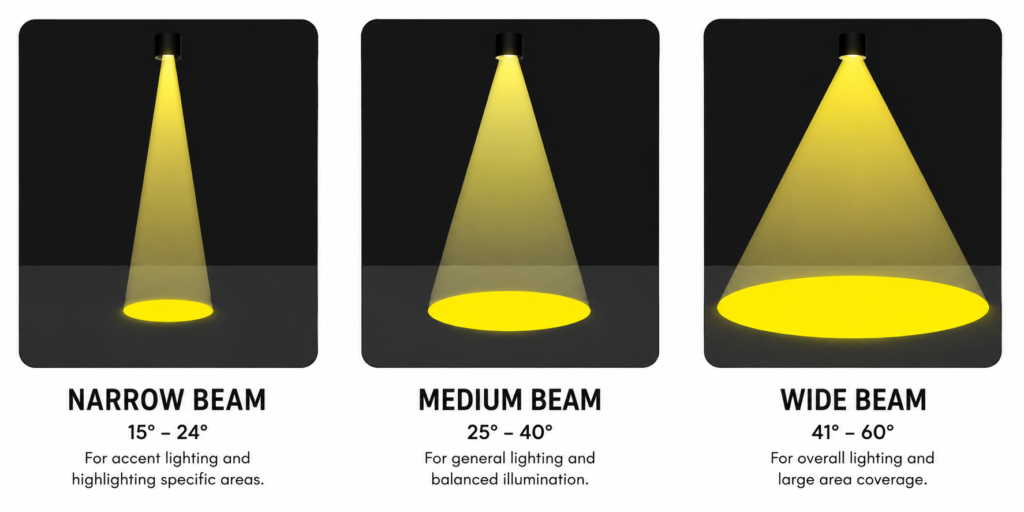
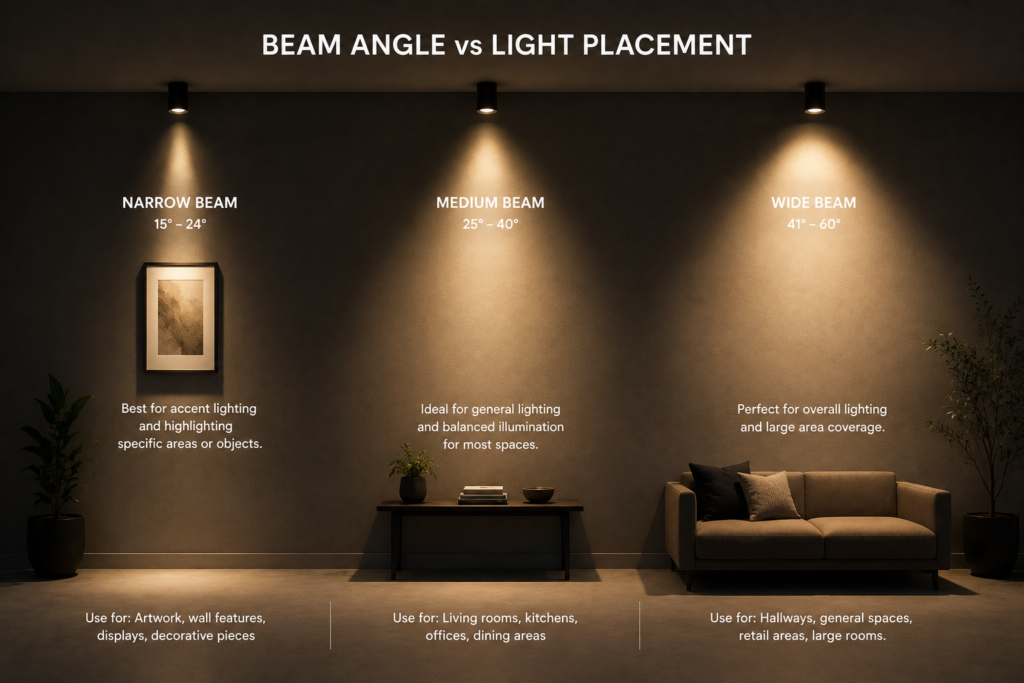
1. Narrow Beam — Around 15° — 24°
Narrow beams produce concentrated light. They are useful when you want to highlight a specific object or
architectural feature.
Ideal applications include artwork, sculptures, product displays, decorative walls, architectural details, and
retail displays.

2. Medium Beam — Around 25° — 45°
Medium beam angles provide a more balanced spread. They can work well for living rooms, dining areas,
retail spaces, galleries, offices, and accent lighti

3. Wide Beam — Around 46° and Above
Wide beams distribute light over a larger area. They are useful for general room lighting, kitchens, offices,
hallways, larger commercial spaces, and open areas.
Beam-angle ranges are general design guides; always check the manufacturer’s actual specification for a
specific fixture

Beam Angle vs. Light Placement
Beam angle does not work independently. Distance matters too.
The farther a light is from the surface being illuminated, the larger the beam will appear on that surface. A
narrow beam can create a small focused spot when close to a wall, but a larger spot when mounted farther
away. A wide beam can create broad coverage even at a shorter distance.
This is especially important for high ceilings, display lighting, directional lighting, and architectural
applications
What Beam Angle Should You Use?
Artwork and decorative pieces: Consider a narrow beam when the goal is to highlight a specific piece.
Retail displays: Directional lighting can help products stand out and can be aimed toward merchandise,
displays, or feature walls.
Living rooms: Medium beams can work well for accent lighting, while wider beams may be better for
general illumination.
Restaurants and cafés: Focused lighting can highlight dining tables or decorative features, while wider
lighting can provide general illumination.
Offices: Broader, more even illumination is usually preferred for general work areas, with directional lighting
added where needed
Beam Angle And Ceiling Height
Ceiling height is another factor to consider. When a fixture is installed higher above a surface, the light
travels farther. The best result depends on the combination of beam angle, lumen output, mounting height,
and fixture spacing.
For commercial and architectural applications, beam angle should be planned together with mounting
height rather than considered by itself.
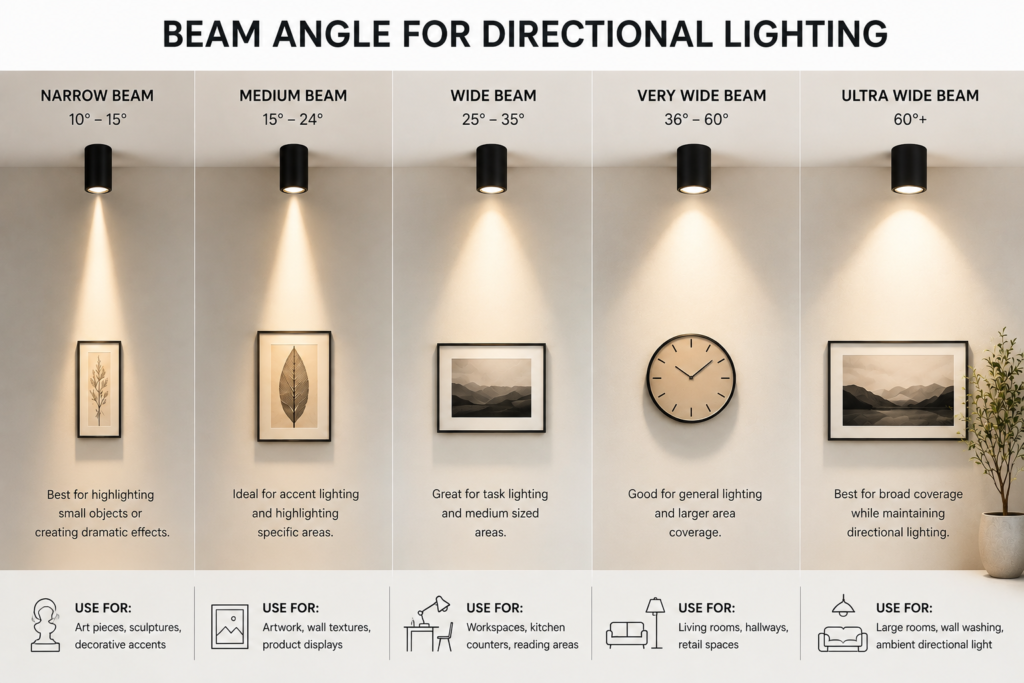
Beam Angle for Directional Lighting
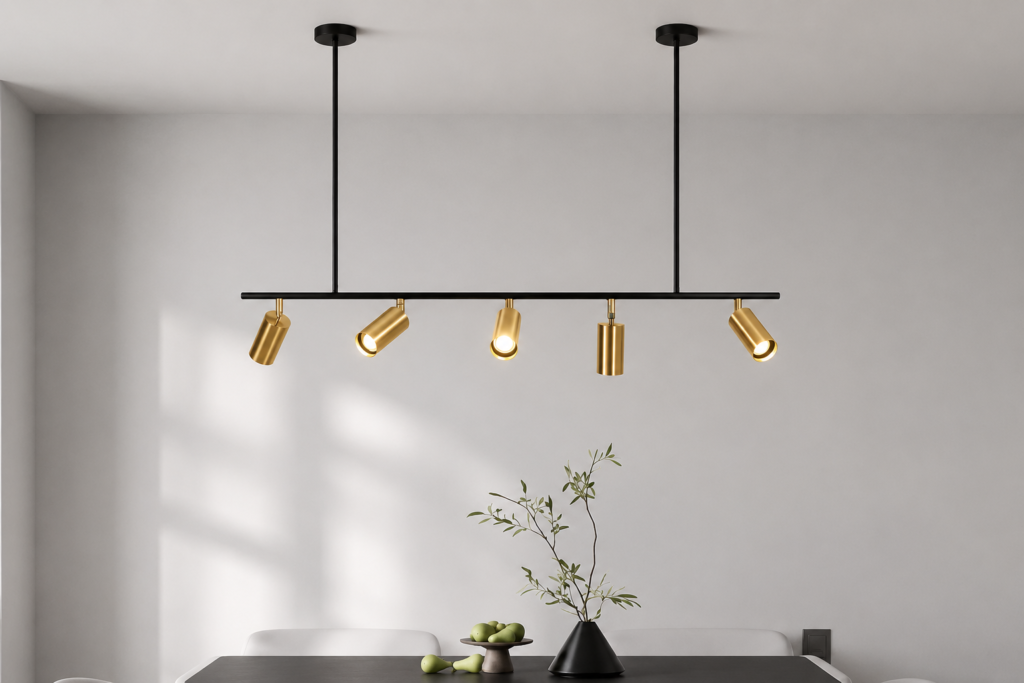
Directional fixtures such as spotlights, adjustable downlights, and track-style fixtures are useful for
demonstrating beam angle because the light can be aimed toward specific areas.
They can be used to highlight artwork, product displays, feature walls, architectural details, or selected
areas of a room
Beam Angle and LED Profiles
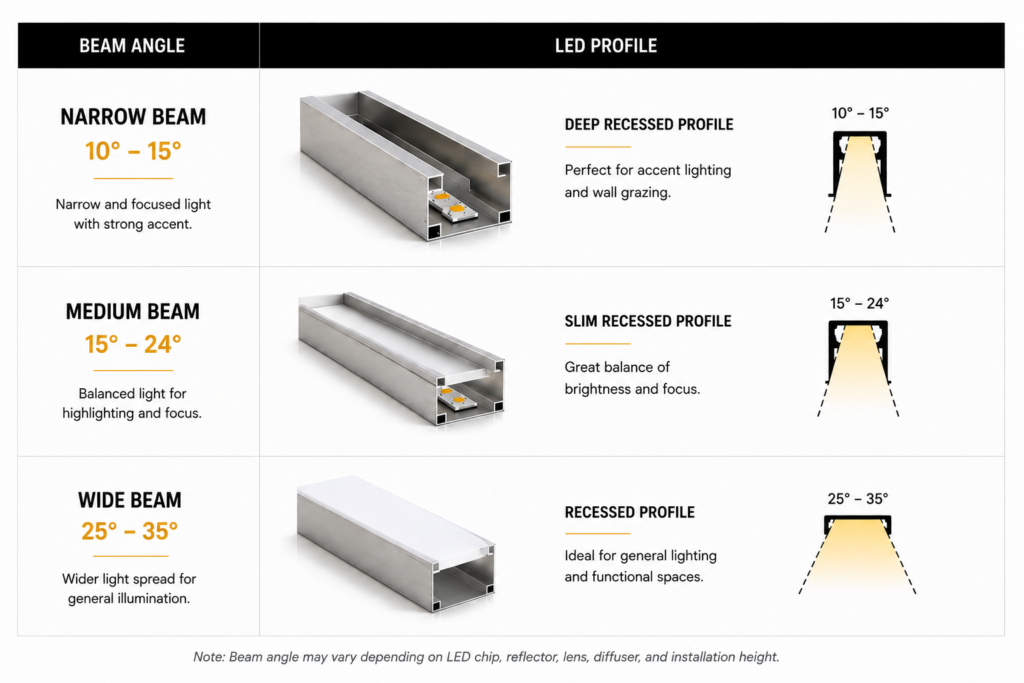
LED strips and profiles are different from traditional spotlights because they are designed to create
continuous linear illumination rather than a focused spotlight beam.
For these applications, the profile and diffuser can have a major effect on how the light appears. Bestyle’s
LED profile range can be used to create clean, continuous lighting for cabinets, ceilings, walls, furniture,
and other architectural detail
Beam Angle vs. Lumens: What’s the Difference?
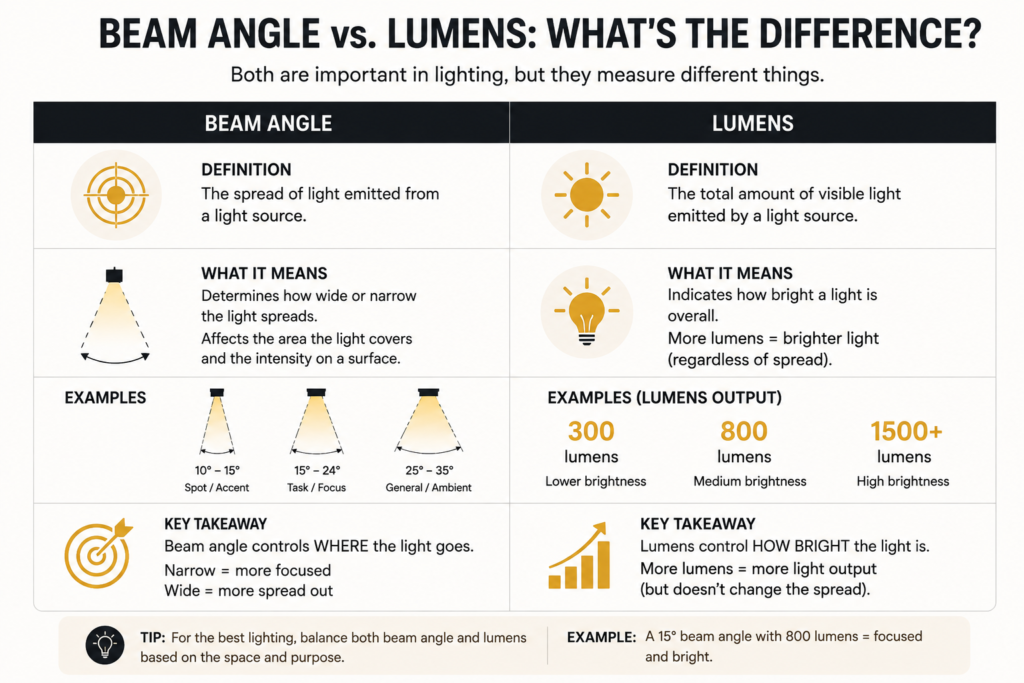
Lumens tell you how much light a source produces. Beam angle tells you how widely that light spreads.
Think of it this way:
Lumens = how much light
Beam angle = how that light is distributed
A high-lumen light is not automatically the right choice for every application. You need to consider how the
light is distributed and where you want it to
How to Choose the Right Beam Angle?
Before purchasing a lighting fixture, ask these questions:
1. What am I lighting — a whole room, dining table, artwork, product display, wall, or architectural detail?
2. How high is the ceiling?
3. Do I want focused or broad lighting?
4. How far is the light from the surface?
5. What type of fixture am I using
The right beam angle should support the purpose of the lighting, not simply the brightness of the fixture.
Final Thoughts
Beam angle may seem like a small technical detail, but it can have a significant effect on how a lighting
design looks and performs.
A narrow beam can create a dramatic focal point. A medium beam can provide balanced directional
illumination. A wide beam can help distribute light across a larger area.
The best lighting solution isn’t necessarily the brightest one. It’s the one that puts the right amount of light in
the right place.
At Bestyle Lighting, you can explore lighting fixtures and LED profile solutions for residential, commercial,
and architectural application